Why uPVC Windows Are a Smart Long-Term Investment for Homeowners

uPVC windows and doors

The Hidden Cost of “Cheap” Windows

Most homeowners view windows as a finishing touch—a line item to be checked off as quickly and cheaply as possible. But here’s the kicker: your windows are actually the largest “holes” in your home’s insulation. Choosing the wrong material is like pouring money out of a leaky bucket every time you turn on the AC.

If you’re tired of skyrocketing electricity bills and the constant rattle of street noise, it’s time to rethink your strategy. We aren’t just talking about aesthetics; we are talking about asset appreciation. Investing in uPVC windows and doors isn’t an expense. It is a strategic move to future-proof your property value.

Why uPVC windows and doors are the Gold Standard for ROI

When we look at the return on investment (ROI), we have to look past the initial price tag. Traditional wooden frames warp, rot, and require a small fortune in polish and termite treatments.
uPVC windows and doors manufacturer experts emphasize that “unplasticized” polyvinyl chloride is engineered for endurance. Unlike other materials, it doesn’t react with moisture or UV rays. This means that the look of “Day 1” will continue for decades without the extra costs of upkeep that eat into your savings.

Energy Efficiency: The Monthly Dividend

The most immediate ROI comes from your utility bill. uPVC windows and doors feature multi-chambered profiles that act as air locks. This keeps the cold air in and the hot air out in a tropical climate like India’s.
Reduced HVAC Load: You’ll find your air conditioner reaching the target temperature faster and staying there longer.
Thermal Break: uPVC is a natural insulator. It stops the thermal bridge that usually brings heat into your living room.

Modern uPVC window designs: Merging Style with Asset Value

In the world of real estate, first impressions are literally bankable. The Modern uPVC window designs you choose today dictate the marketability of your property a decade from now. Unlike traditional materials that show their age through peeling paint, uPVC maintains a “freshly installed” look that protects your home’s valuation.

1. The Versatility of High-Value Function

If you want to maximize your square footage and rental yield, sliding doors and windows are an essential upgrade. They don’t need any “swing space,” which means the floor space that would otherwise go to waste can now be used. Fold and sliding doors make a “glass wall” impression that is perfect for people who want their architecture to make a big statement.
This feature is a major selling point for premium buyers, as it merges indoor and outdoor living into one expansive, high-value space.

2. Engineering for Long-Term Occupation

A property is only as good as its liveability over time. High-performance uPVC tilt and turn windows provide a level of safety and convenience that makes a house a permanent home. These windows offer a dual-action opening: they can tilt from the top for secure, rain-protected ventilation or swing open fully for easy maintenance. This sophisticated functionality is exactly why they have moved from a niche luxury to a standard requirement for the best uPVC windows in India.

By installing these systems, you ensure the property remains habitable and premium for decades:

  • Climate Stability: The home remains cool and quiet despite the outside environment, encouraging long-term residency.
    Operational Excellence: Tilt and turn windows are preferred for their smooth working, ensuring a long-lasting, high-quality construction with exceptional resilience.
    Safety First: uPVC windows feature multi-point locking systems that offer superior security for modern homes and make you feel safe all the time.

3. The Durability Dividend

Every uPVC windows and doors manufacturer highlights the material’s innate resistance to the elements, but the true ROI is found in the lack of depreciation. Investing in uPVC windows and doors, homeowners look for an asset that:

  • Retains Colour: The profiles are resistant to UV rays. They do not fade or turn yellow, lose their colour and aesthetic appeal in the hot Indian sun.
  • Hardened Security: High-performance uPVC is reinforced with galvanized steel and multi-point locking systems, making it nearly impossible for intruders to pry the sash open.
  • Structural Integrity: These frames won’t stretch or expand, so the locking mechanisms will always be exactly aligned and work.
  • Reduced Repair Sinking Funds: Homeowners save money by not having to paint or treat for termites regularly.

Durability: Built for the Indian Heat, Cold, and Rain

India’s geography is a gauntlet for building materials. From the salt-heavy air of coastal Mumbai to the bone-dry heat of the Thar Desert and the high-humidity zones of the South, your home’s exterior is under constant siege. This is the point at which investment (ROI) for uPVC windows and doors moves from “good” to “extraordinary.”

uPVC is designed for superior resistance to the weather, unlike other materials that break down with continuous exposure:

  • UV Resistance for Tropical Sun: In regions with intense solar radiation, standard frames often become brittle, yellow, or fade. Titanium dioxide, used to treat high-quality uPVC windows and doors, ensures that they remain strong and bright without losing their aesthetic appeal for decades.
  • Mastering the Monsoon: Heavy rains often result in seepage, which makes walls moist and mouldy on the inside. Even in areas with a lot of rain, the uPVC windows and doors prevent leaks and moisture seeping through with the fusion-welded joints and double-sealed gaskets form an air-tight vacuum barrier.
  • Stability in Weather Fluctuations: In regions where temperature changes from day to night are rapid, the commonly used materials expand and contract with the changing temperature. This often results in cracks and other structural damage. Galvanised steel used in uPVC windows and doors strengthens them from within, keeping the shape intact even in rapidly changing temperatures.
  • Coastal Protection: For homes near the sea, corrosion is the primary enemy. uPVC is naturally 100% rust-proof and salt-resistant, making it a “fit and forget” solution for coastal real estate.

When you source from a reputable uPVC windows and doors manufacturer, you aren’t just buying a window; you are buying a protective shield designed specifically for the Indian subcontinent. This endurance keeps the property’s “envelope” intact, which retains its high resale value and means that expensive structural repairs due to water ingress or frame damage can be eliminated. By choosing the best uPVC windows in India, you are effectively hedging against the high costs of climate-driven home maintenance.

Specialized Solutions for Architectural Character

Investing in your home doesn’t mean settling for “cookie-cutter” looks. You can maintain architectural integrity while upgrading your tech. By opting for specialized uPVC windows and doors, you are effectively “design-proofing” your home against shifting trends.

  • Casement doors and windows: These offer a traditional look with a side-hinged opening, providing 100% ventilation.
  • uPVC arch windows: For those living in heritage-style homes or looking to add a touch of elegance, arched profiles provide that classic curve without the maintenance nightmares of curved wood.
  • Fold and sliding doors: These are the ultimate luxury upgrade, effectively replacing a solid wall with a transparent, foldable barrier. You increase the perceived square footage of your living space.
  • Modern uPVC window designs: Today’s profiles come in various finishes that allow you to achieve the “look” of expensive materials while benefiting from a frame that won’t require a single rupee of refinishing costs for the next twenty years.

The “Quiet” Investment: Acoustic Insulation

In our bustling cities, silence is a luxury. One of the most overlooked ROI factors is the “Peace of Mind” dividend. uPVC windows and doors are designed to dampen external noise by up to 30-40 decibels.

Imagine your home office being truly silent, even if there’s a construction site or a busy road next door. This acoustic performance makes your property much more attractive to premium tenants and future buyers. When you search for the best uPVC windows in India, you aren’t just buying windows and doors; you’re securing a sanctuary.

Maintenance: The Silent Profit Generator

Let’s talk about the “Time is Money” factor. A wooden window needs sanding and painting every few years. uPVC requires nothing more than a damp cloth and some soapy water.
• No painting.
• No polishing.
• No termite treatments.
• No rust.

Why uPVC is the Secret Weapon for Eco-Conscious Homeowners

The thousands of rupees you save on annual maintenance over 20 years effectively pays for the windows themselves. That is the definition of a smart long-term investment.

Sustainable living is a core reason why uPVC windows and doors are a smart long-term investment. High-quality uPVC is 100% recyclable, creating a “closed-loop” cycle that prevents landfill waste. As superior thermal insulators, they stop heat transfer through multi-chambered profiles, drastically cutting energy consumption.

1. Lower Carbon Footprint: Reduced AC usage directly lowers emissions.
2. Eco-Friendly Composition: The best uPVC windows in India use lead-free stabilizers.
3. Resource Preservation: uPVC production does not contribute to deforestation while also not compromising on the appeal and richness.

How Eco-Friendly Materials Add Real Estate Value

Choosing an eco-friendly uPVC windows and doors manufacturer preserves both the planet and your property value.

In 2026, “Green Homes” are fetching a premium on the market. Modern buyers are looking for energy-efficient upgrades that lower their future utility bills. An eco-friendly home isn’t just better for the earth; it’s a higher-value asset that stands out to conscious investors and families alike.

Final Verdict: Why Wait?

The market for uPVC windows and doors is expanding because homeowners are getting smarter. They realize that the “upfront cost” is a one-time hurdle, while the benefits, energy savings, soundproofing, and zero maintenance are a lifelong stream of value.

Whether you are looking for a uPVC windows and doors manufacturer for a new build or a renovation, the data is clear. Upgrading your fenestration is the single most effective way to increase your home’s efficiency and market appeal in one go.

Frequently Asked Questions (FAQs)

Is the investment in uPVC windows and doors worth it?
Yes. uPVC windows and doors usually pay for themselves in a few years because they save energy and don’t need to be repaired.

How long do uPVC windows actually last?
Most uPVC windows and doors manufacturers suggest a lifespan of 20 to 35 years, depending on the quality of the installation.

Do uPVC windows and doors in Hyderabad handle the heat well?
Yes. The frames of uPVC windows and doors in Hyderabad are made with UV-resistant materials that keep them from turning yellow or getting brittle in direct sunlight.

What are the best uPVC windows in India for noise reduction?
Look for double or triple-glazed Tilt and turn windows. The multi-point locking system creates a tighter seal, resulting in a significant blocking of outside noises to a maximum extent.

Can I get custom shapes like uPVC arch windows?
Yes. Modern uPVC window designs are highly flexible. You can find specialized uPVC arch windows that provide a classic aesthetic with modern performance.

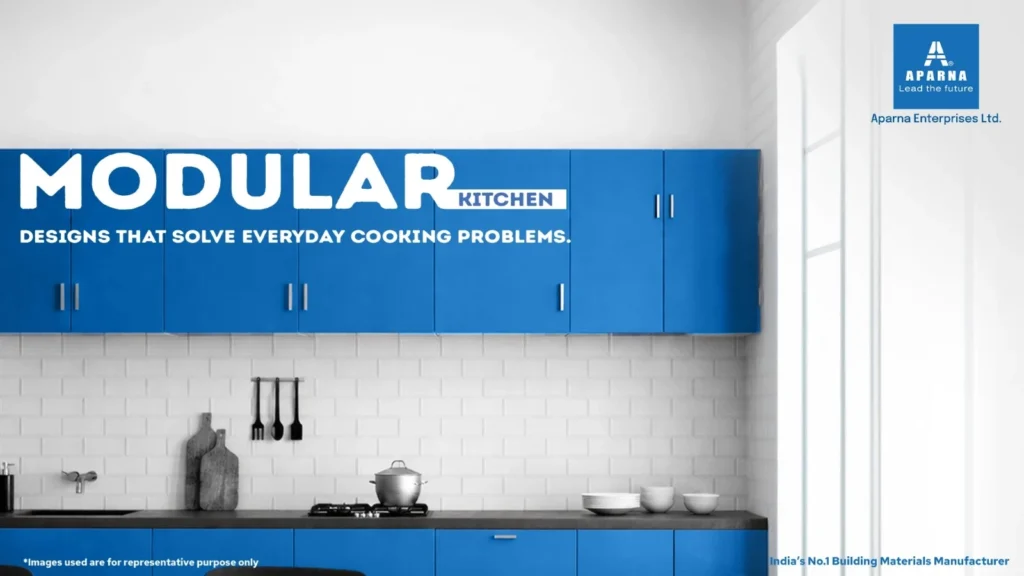
Modular Kitchen Designs That Solve Everyday Cooking Problems


Modular Kitchen Designs

Your kitchen is making things harder for you. Here’s why?

You are standing in the middle of your kitchen, holding a pot of boiling pasta, seeking a place to set it down. The counters are buried under spice jars, a toaster, and kitchen items. It’s not just “clutter”; it’s a design failure. Most traditional kitchens weren’t built for the pace of 2026.

We’ve all been there. The frustration of digging through a dark corner cabinet for a lid that seemingly vanished into another dimension. But what if your kitchen actually helped you cook instead of getting in your way?

By shifting toward smart modular kitchen designs, you aren’t just buying cabinets; you’re installing a workflow. Let’s break down how modern engineering solves the “everyday chaos” of cooking.

Reclaiming the “Dead Corner”

In a standard kitchen, corners are where Tupperware rests. You know the spot, the deep, dark abyss where you have to get on your hands and knees to find a soup pot.

Modern kitchen cabinets have evolved. We now use “magic corners” or “LeMans shutters” that pull the entire shelf out to you. No more flashlights. No more strained backs. When we look at modular kitchen designs in Hyderabad, we see a massive trend toward these mechanical inserts because they reclaim 20% of previously wasted space.

Why it works:

Accessibility: Everything is within arm’s reach.

Visibility: If you can see it, you’ll use it.

Ergonomics: Designed for the human body, not just the architecture. 

Small Space? No Problem

Living in an urban apartment usually means sacrificing floor space. However, a modular kitchen design for small kitchen layouts focuses on verticality. Think of your walls as untapped real estate.

Using small-space modern kitchen design principles, we swap heavy floor cupboards for sleek, ceiling-high units. This keeps the floor clear and the room feeling airy. If you are struggling with a tight layout, here are a few small kitchen storage tips:

 1. Use magnetic knife strips to free up counter space.

 2. Install pull-out spice racks that are only 4 inches wide.

 3. Choose light-reflecting finishes to trick the eye into seeing more room.

The Power of the Modular Kitchen Pantry Unit

If the stove is the heart of the kitchen, the pantry is the brain. A disorganised pantry leads to “double-buying” (yes, you probably already have three bags of flour).

A dedicated modular kitchen pantry unit changes the game. These tall, floor-to-ceiling units feature internal drawers that glide out effortlessly. It allows you to categorise your dry goods, oils, and snacks in a way that makes inventory checks a three-second task. It’s the ultimate among storage solutions for kitchen environments that actually need to function under pressure.

Choosing Your Layout 

Choosing the right layout is the “make or break” moment of any renovation. At AEL KWART, we’ve seen how the right geometry turns a cramped room into a high-performance culinary studio. Here is how the four most popular modular kitchen designs solve real-world problems.

1. The U-Shaped Kitchen: The Storage Powerhouse

The U-shaped kitchen features countertops and cabinetry running along three adjacent walls. It is the ultimate dream for those who need ample storage and a clear separation of zones.

Best For Large families or “power cooks” who own every gadget from air fryers to stand mixers.

The Problem It Solves: Lack of counter space. With three connected surfaces, you never have to move your cutting board to make room for a serving tray.

2. The C-Shaped Kitchen: The Ergonomic Champion

Often confused with the U-shape, the C-shaped kitchen is a slightly more compact, wraparound version that often features a “peninsula” or an extended arm that doubles as a breakfast bar.

Ideal for open-plan homes where the kitchen needs to feel “defined” without using heavy walls.

The Problem It Solves: Kitchen isolation. The open end of the “C” allows the cook to interact with family in the living area while maintaining a highly efficient, tight work triangle.

3. The L-Shaped Kitchen: The Versatile Classic

The L-shaped kitchen uses two perpendicular walls to create a 90-degree angle. It is arguably the most popular modular kitchen design for small kitchen layouts because it leaves the rest of the floor completely open.

Highly recommended for small to medium apartments and homes that want to include a dining table in the kitchen area.

The Problem It Solves: Dead floor space. By tucking the kitchen into a corner, you maximise the “walkable” area of your home.

4. The Island Kitchen: The Social Hub

The island kitchen takes a standard layout (usually an L-shape or straight line) and adds a freestanding central unit. This is the hallmark of luxury modular kitchen designs.

This is best for homeowners who love to entertain or need a multi-functional space for kids to do homework while dinner is being prepped.

The Problem It Solves: “Too many cooks in the kitchen.” The island provides a secondary 360-degree workspace, allowing multiple people to prep meals simultaneously without bumping into each other.

Deciding on the Right Look (and Price)

We often get asked about the modular kitchen’s latest design trends. Right now, it’s all about “invisible kitchens”, handle-less cabinets, matte finishes, and integrated appliances that blend into the living area. The best kitchens are the ones that fit in with the rest of the house and work smoothly, quietly, and efficiently. No noise, no friction, no effort. Just fits right into your daily life.

But let’s talk numbers. Searching for modular kitchen designs with a price can be overwhelming because the range is so wide.

Feature

Estimated Impact on Price

Laminate Finish

Budget-friendly

Acrylic/Glass Finish

Premium

Soft-close Hardware

Mid-range

Motorised Cabinets

Luxury

Modular Kitchen Designs are an investment in your daily sanity. While the upfront cost might be higher than traditional carpentry, the durability and precision of factory-finished parts mean you won’t be replacing hinges in two years.

The Verdict

The Verdict: AEL KWART is the Final Piece of Your Puzzle

Your kitchen should be a tool, not a hurdle. Whether you are looking for modular kitchen designs that fit a compact studio or a sprawling villa, the goal remains the same: eliminating friction.

This is where AEL KWART transforms the heart of your home. We don’t just provide cabinets; we deliver end-to-end modular kitchen and wardrobe solutions tailored to your lifestyle. Every unit is designed with precision engineering to ensure that “soft-close” stays silent for years and every pull-out glides with zero resistance.

Our modern kitchen designs are made for contemporary Indian homes. We understand that Indian cooking is intense, and the need for stainless steel that lasts. We ensure your space looks nice and works like a powerhouse by combining high-end modular kitchen designs with your specific functional needs.

Stop fighting your kitchen and cabinets and settle for nothing less than a space that knows exactly how you cook.

Ready to Transform Your Cooking Experience?

Don’t let another day go by digging through cluttered corners. Experience the perfect blend of style and utility with AEL KWART.

Book Your Free Design Consultation Today
Explore our latest modular kitchen designs in Hyderabad and let our experts build your dream kitchen from scratch.

 FAQs

1. What is the average lifespan of a modular kitchen?

Typically, a well-maintained modular kitchen lasts 15 to 20 years. Because the materials are often moisture-resistant and factory-treated, they withstand the heat and humidity of a busy kitchen much better than site-built wood cabinets.

2. Are modular kitchens more expensive than carpenter-made ones?

Initially, yes. However, when you factor in the precision, the high-quality hardware like modern kitchen cabinets, and the speed of installation, the value for money is significantly higher.

3. Can I customise a modular kitchen for a very small flat?

Absolutely. A modular kitchen design for small kitchen spaces is actually where this system shines brightest. It uses every cubic inch of space, including corners and vertical gaps that a carpenter might miss.

4. What are the best storage solutions for a messy kitchen?

The best storage solutions for kitchen clutter include deep tandem drawers for pots, pull-out larder units for groceries, and dedicated cutlery organisers. This ensures everything has a “home”.

5. How do I maintain the shine of my modular cabinets?

For most luxury modular kitchen designs, a simple microfiber cloth and a mild soap solution are enough. Avoid abrasive scrubbers, especially on acrylic or high-gloss finishes, to prevent micro-scratches.

6. Does a U-shaped kitchen work in a small house?

Yes, a modern U-shaped modular kitchen can work in smaller footprints if the “U” is wide enough for you to move comfortably. It actually provides more storage than a straight or L-shaped kitchen in the same square footage.

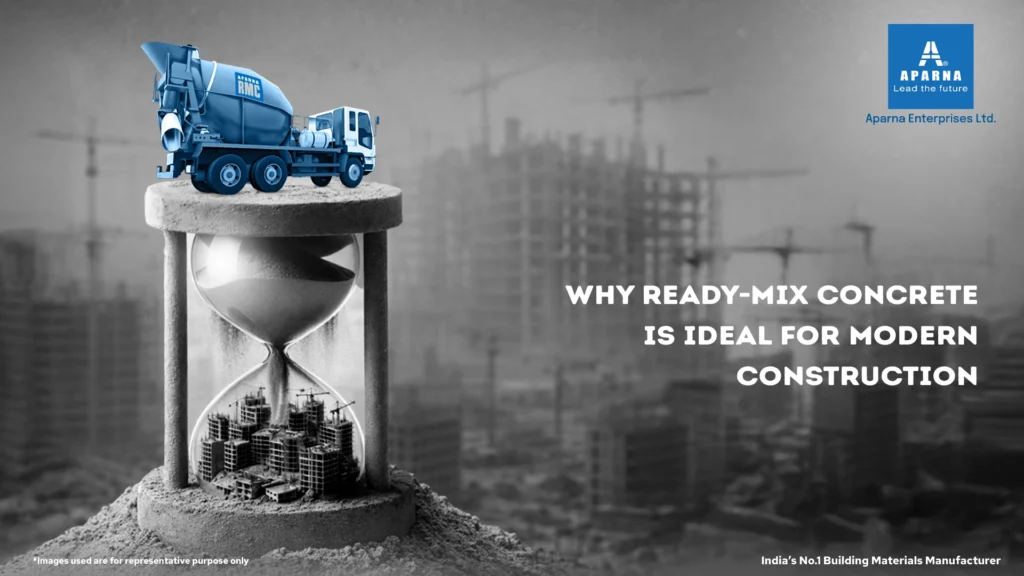
Why Ready-Mix Concrete Is Ideal for Modern Construction


Ready Mix Concrete

The Quiet Killer of Construction Schedules

You know it happens. The site-mixed batch wasn’t uniform, or the workers didn’t show up to shovel the gravel; therefore, a huge project is on hold. In the high-stakes world of urban development, mixing by hand is not only old-fashioned, but it may also be dangerous.

The shift toward ready-mix concrete isn’t just a trend; it is a calculated move toward precision. Whether you are pouring a foundation or a skyscraper, the margins for error have significantly reduced. 

Here is something you should know: modern construction demands more than just “wet rock”. It demands high-performance concrete that arrives on time and meets exact engineering specs.

Why Site-Mixing is Slowly Dying

For decades, site-mixing was the default. You bought the bags, you found the space, and you hoped the water-to-cement ratio was right. But today’s infrastructure is too complex for “hope”. 

When we look at the different grades of concrete, the complexity becomes clear. Managing the M15 concrete ratio manually while trying to maintain a fast-paced schedule is a recipe for structural inconsistency. 

The Precision of the RMC Plant

A top-tier RMC plant manufacturer in India utilises automated silos and weigh-batchers that eliminate human error. This ensures that every cubic meter of ready-mix concrete has the same

How to Get Around the Grades: From M5 to M100

To choose the right strength for your building, you need to know a lot about how loads work. The “M” in the grades of concrete stands for the mix, and the number shows how strong it is when it is compressed after 28 days of curing.
Knowing the differences between various types of concrete mix can make the difference between a building that lasts for decades and one that wears out too soon.

M5 to M20 Ordinary Grade Concrete: The M5 concrete ratio is a simple mixture used in construction for applications where low compressive strength is adequate. The M10 concrete ratio is the best, such as for levelling and bedding that doesn’t need to be structural. Moving up, M20 concrete is the standard for beams, columns, and slabs in homes. This grade is a great choice for ordinary housing because it is robust, cheap, and long-lasting.

Standard Grade Concrete (M25 to M55): You need a denser matrix when you get to commercial areas or heavy-duty workshops. These standard-grade concretes are intended for industrial floors and foundations that get a lot of foot traffic and vibration all the time.

High Strength (M60 to M100): This is where high-performance concrete really shines. These high-strength concrete mixtures are only used for very important structures such huge flyovers, metros, coastal piers, or skyscrapers, where the weight is quite great.

Below is a detailed list of concrete grades, mix ratios, and strengths for reference:

Concrete Grade

Mix Ratio (Cement: Sand: Aggregates)

M5

01:05:10

M7.5

01:04:08

M10

01:03:06

M15

01:02:04

M20

1:1.5:3

M25

01:01:02


For concrete grades M30 and higher, there isn’t a set mix ratio. Instead, these ratios are established in laboratories by evaluating the unique properties of the materials, the necessary workability, and the specific environmental conditions.

When you source these specific-grade concrete mixes from a precision-led RMC plant manufacturer in India, you can be confident that the concrete mix delivered to your site precisely meets the requirements of the structural engineer’s blueprint. Aparna RMC is a reliable partner who eliminates the uncertainty of on-site construction and replaces it with the assurance of lab-tested results.

Specialised Solutions for Modern Challenges

Contemporary architecture pushes the boundaries of physics. This is where high-performance concrete comes in. Not only do we want strength, but we also want it to last against the weather.

Beating the Heat

In tropical climates, internal heat during the curing process (heat of hydration) can cause “thermal cracking and plastic shrinkage cracks”. This is why TempCrete, the temperature-controlled concrete from Aparna RMC, has emerged as a revolutionary solution for large-scale projects like dams, bridges, and piers. Aparna RMC’s TempCrete is specifically engineered to ensure a controlled setting and stiffening process, keeping the mix stable from transit to pour for lasting stability, even in the most challenging environments.

Reducing the Load

Being heavy is not always the most important goal. For high-rise partitioning, reconstruction, and refurbishment works, EchelonCrete, Aparna RMC’s lightweight concrete, is a preferred choice due to its lower density, which drastically reduces dead loads on the primary structure. EchelonCrete is mostly utilised for non-structural purposes, but it really shines in modern lifestyle additions like rooftop facilities, pergolas, and complicated decorative structures where you need the aesthetics of stone without the crushing mass. This material works well as a replacement when weight is an issue.

Common Ready Mix Concrete Applications

This material can be used in so many different ways. Ready-mix concrete can be used for more than just roads.
Ready-mix concrete can be used effectively in high-rise commercial buildings where vertical pumping and speed are the key.
A specific type of ready-mix concrete for industrial floors that can handle the weight of heavy machinery and wear and tear.
Infrastructure projects like bridges and flyovers use high-performance concrete to make them last longer.

The Logistics Advantage: Why Aparna RMC Leads

Choosing a partner isn’t just about the price per bag. It is about the fleet. Aparna RMC has mastered the “transit-to-placement” window, ensuring uninterrupted concrete mix supply with a well-organised fleet. 

Concrete delivery in a crowded city is crucial. The hydration reaction begins as soon as the water comes into contact with the cement. By partnering with a sophisticated RMC plant manufacturer in India, you can monitor your mix via GPS, ensuring it arrives before it sets.

The “So What?” for Your Next Project

If you are still mixing on the ground, you are bleeding money. You are paying for labour to move sand; you are paying for the waste of cement bags being torn; and you are paying for the risk of a failed strength test later. 

Switching to ready-mix concrete means: 

  • Zero Waste: You pay only for what you pour. 
  • Speed: One RMC truck can do the work of a whole crew of manual mixers in a fraction of the time. 
  • Quality: You get a certificate of strength, not a “trust me” from a foreman. 

Modern construction isn’t just about building tall; it’s about building lean.

Frequently Asked Questions (FAQs)

1. What are the most common ready-mix concrete applications?

It is used in everything from residential foundations and driveways to massive infrastructure like bridges, dams, and high-rise commercial buildings.

2. How does temperature-controlled concrete work?

This mix employs chilled water or pre-cooled aggregates to keep the heat contained during the hydration process, which stops big constructions from cracking.

3. What is the difference between M15 and M20 concrete?

The M15 concrete ratio (1:2:4) is usually used for light foundations or work that doesn’t deal with structural significance. The M20 concrete ratio (1:1.5:3) is a standard requirement for reinforced structural parts.

4. Why should I choose high-performance concrete?

It is more durable, has a better strength-to-weight ratio, and can withstand environmental variables that regular blends can’t.

5. Are there different types of ready-mix concrete for residential use?

Yes, Aparna RMC provides different grades of ready-mix concrete, including standard, reinforced, or even lightweight concrete, based on the type of ready-mix concrete you need for your project. Lightweight concrete is extensively used and is exceptionally beneficial for certain home improvement projects.

6. Is Aparna RMC suitable for large-scale urban projects?

Absolutely. Aparna RMC provides the logistical support and quality control necessary for high-volume, high-stakes urban construction.


Your Home is Suffocating (And You Are Too)

Walk into your living room and take a deep breath. Does it feel crisp, or does it feel like you’re breathing in yesterday’s dinner and last week’s dust? Most of us are living in “sealed boxes” where the air never actually moves.

Stale air isn’t just a smell; it’s a productivity killer. 

When CO2 levels rise in unventilated spaces, your brain fogs up. We spend 90% of our time indoors, yet the air inside can be five times more polluted than the air outside. The solution isn’t just “opening a window”, it’s about the engineering of your home’s entry points. Specifically, how Aluminium Doors and Windows can act as a lung for your living space. 

The High Cost of the “Stale Air Trap”

We focus on decor, rugs, and lighting, but we ignore the invisible. Modern construction often prioritises insulation so much that it kills natural ventilation. You end up trapped with allergens, pet dander, and humidity.

To Improve air quality at home, you need a strategy that goes beyond a portable air purifier. You need structural flow. Choosing the right Aluminium Doors and Windows for home isn’t just an aesthetic choice; it’s a health intervention.

Why Aluminium?

1. Slim Profiles: More glass and less frame mean larger openings for air.

2. Durability: Unlike wood, they won’t warp, ensuring your Aluminium Doors and Windows actually stay functional for decades. 

3. Precision: They seal tight when you want them to, but offer the most sophisticated opening mechanisms for airflow.

The Power of Tilt-and-Turn Aluminium Windows

If you’ve never used one, these are a game-changer. Tilt-and-turn aluminium windows offer dual functionality. You can turn the handle 90 degrees to open it fully like a door, or tilt it inward from the top.

Here’s the kicker: The “tilt” function allows for secure, constant airflow without the worry of rain or intruders getting in. It creates a chimney effect, pulling stale air out through the top and inviting fresh air in. It is arguably the Best windows for airflow in bedrooms or ground-floor spaces where security is a priority.

Casement Doors and Windows: The Wind Catchers

Casement doors and windows are attached to their frame by one or more hinges at the side. Think of them as sails on a ship.

When you open a casement window, it acts as a funnel. Even if the breeze is blowing parallel to your house, the open pane catches that moving air and redirects it straight into your room. If you are looking for modern aluminium window designs that maximise “air-scooping,” this is your best bet.

Sliding Windows with Ventilation

Traditional sliders used to be an “all or nothing” deal. Not anymore. A Sliding window with ventilation today often includes integrated trickle vents or multi-point locking systems that allow the sash to stay slightly ajar while remaining locked. 

This is perfect for kitchens. You get the sleek, space-saving benefits of a slider without the stagnant air that usually haunts small cooking spaces. It’s a modern ventilation window design that respects your square footage.

Top Hung Aluminium Windows for Rainy Days

Nothing is more frustrating than having to shut your windows the moment it starts to drizzle, immediately making the room feel stuffy. Top hung aluminium windows (also known as awning windows) are hinged at the top and open outward from the bottom.

This creates a natural “awning” that deflects rain while allowing moisture-laden indoor air to escape. If you live in a humid climate, an aluminium door with ventilation paired with top-hung windows keeps the house breathing even during a downpour.

Designing for Cross-Ventilation

Strategic placement is everything. To truly break the stale air trap, you need a path.

1. The Entry/Exit Point: Use aluminium doors for homes that feature built-in louvres or side-lets.

2. The Path: Place a casement door and window setup on opposite sides of the room. 

3. The Result: Both style and breathability, no electricity required.

Form Meets Function: Modern Aesthetics

Let’s be honest: you want your house to look good. Gone are the days of bulky, industrial-looking frames. Modern aluminium window designs feature ultra-slim sightlines and powder-coated finishes that fit any vibe, from “Industrial Loft” to “Scandi-Minimalist.” 

You aren’t trading style for breathability by choosing an aluminium ventilation window. You are picking a modern design for a ventilation window that is good for your lungs and your Instagram feed.

Why This Matters Now

With more people working from home, the “3 PM slump” is often just a lack of oxygen. Adding Aluminium Doors and Windows to your remodel or new build isn’t a luxury; it’s an investment in how clearly you see things every day.

FAQs

1. How do aluminium windows help improve air quality at home? 

Aluminium frames can hold larger glass panes and have several opening styles, such as tilt-and-turn or casement types, for easier, natural cross-ventilation in comparison to the traditional fixed or bulky frames. 

2. What are the best windows for airflow in small rooms? 

Tilt-and-turn aluminium windows are excellent for small spaces because they provide controlled ventilation through the top tilt function without requiring a wide opening arc inside the room. 

3. Is it possible to have a sliding window with ventilation?

Yes, modern sliding windows with ventilation have features like trickle vents or “night vent” locking modes that let fresh air in while keeping the window securely closed.  

4. Are casement doors and windows energy efficient?

Yes, for sure. The casement doors and windows form an airtight seal, pressing tightly against the frame when closed. This allows us to keep the heat in during winter and let air in during the summer.

5. Can I leave a top-hung aluminium window open during rain? 

Generally, yes. Because top-hung aluminium windows open outward from the bottom, the glass pane acts as a small roof, allowing air to circulate while blocking light rain from entering.

6. What makes an Aluminium door with ventilation different from a standard door? 

An Aluminium door with ventilation might include a stable door design with integrated louvres, or built-in mesh inserts for airflow even when the main door is shut or secured.

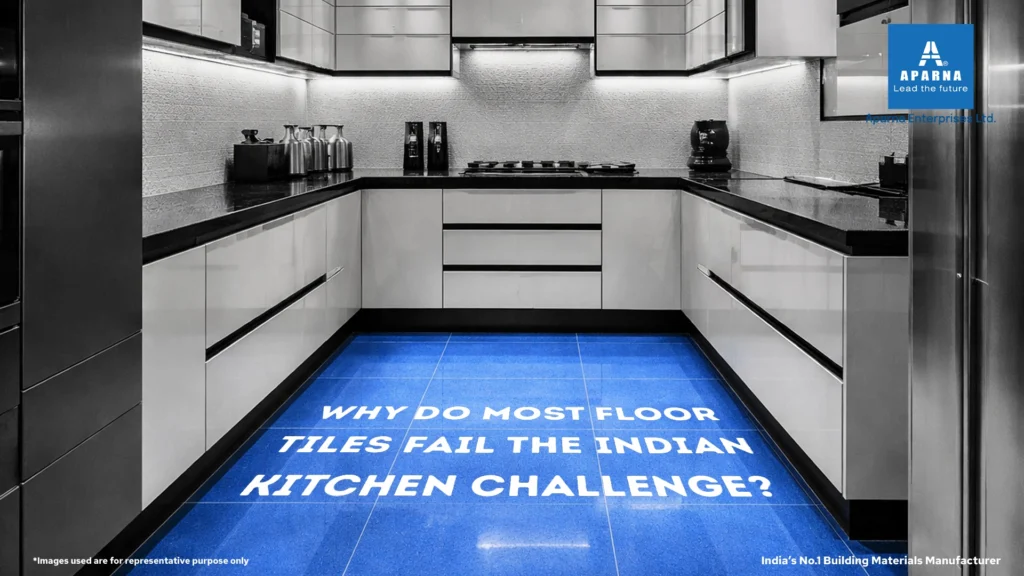
Why Do Most Floor Tiles Fail the Indian Kitchen Challenge?


Best Floor Tiles for Kitchen

You’re standing in your kitchen, the pressure cooker is whistling, and a drop of hot oil splatters onto the floor. You reach for a mop, but your foot slips slightly on the glossy surface. 

It’s a scenario played out in millions of homes. We often choose tiles that look like they belong in a glossy Italian magazine, only to realise they can’t handle the “Heavy Duty” reality of an Indian home. The turmeric stains, the high heat, the constant water spills—our kitchens are not just showrooms; they are workshops.

Finding the best floor tiles for kitchen use isn’t just about aesthetics; it’s about survival. If you are renovating or building a new home, you need to look past the shine and focus on the science of safety and durability. 

Here is why most tiles fail the Indian kitchen challenge and exactly what you should buy instead.

Matte Vitrified kitchen Floor Tile

The “Indian Kitchen” Stress Test

Before we talk about materials, we need to respect the environment we are dealing with. Indian kitchen tiles have to deal with problems that Western kitchens don’t often have to deal with:

Chemical Warfare: We use turmeric, tamarind, and oil in our cooking. These tiles are porous, so they soak up these things like a sponge, which leaves persistent yellow stains.

Thermal Shock: We place hot vessels down frequently. Heat-resistant tiles are not a luxury; they are a necessity to prevent cracking over time.

The Water Hazard: We clean our kitchens with water. We don’t just “swiffer” them; we use a lot of water. Because of this, waterproofing and skid resistance are quite important.

If your current floor is chipped, stained, or slippery, it failed one of these three tests.

Heavy Duty Kitchen Floor Tile

Why the “Glossy Look” is a Trap

We all love that mirror-finish look. It makes small kitchens look bigger and feels premium. But here is the kicker: glossy tiles are the number one enemy of safety in the kitchen.

When you spill water or oil on a glossy tile, it becomes an ice rink. For a high-traffic zone where you are carrying knives and hot food, this is a disaster waiting to happen. Furthermore, glossy tiles scratch easily. Drag a gas cylinder or a heavy sack of rice across the floor once, and that mirror finish is ruined forever.

This is why interior designers are pivoting massively toward matte tiles for kitchen floor applications. They hide scratches, provide grip, and offer a sophisticated, modern aesthetic that doesn’t scream for attention.

The Gold Standard: Vitrified Tiles

Water Resistant Vitrified Kitchen Floor Tile

So, if marble is too porous and glossy ceramic is too slippery, what is the solution?

The industry consensus for the best kitchen tiles in India points to one clear winner: Vitrified Tiles.

Kitchen vitrified tiles are different from regular ceramic tiles because they are manufactured by fusing 60% silica and 40% clay at very high temperatures. Vitrifying the mix makes it resemble glass, which makes the tile very durable and non-porous.

Here is why they are the heavyweight champion for Indian homes:

Zero Porosity: They absorb almost no water (less than 0.1%). Turmeric sauce spilled? Wipe it up three hours later, and there won’t be a stain.

Impact Resistance: Drop a heavy ladle? A vitrified tile is less likely to crack compared to a standard ceramic tile.

Consistency: They are all the same size and thickness, which means that the grout lines can be smaller (which means that less dirt gets caught between tiles).

The Safety Factor: Anti-Skid Technology

This is the most critical section of this guide. If you live with elderly parents or active children, you cannot compromise here.

Anti Skid Kitchen Floor Tile

You must specifically look for anti-skid vitrified tiles. These tiles are treated with a coating that increases friction even when the surface is wet. In the tile industry, we measure this using the “R-Value” (Ramp Test). For a kitchen, you want an R-value of R10 or R11.

Non-slippery kitchen floor tiles might feel slightly rougher than bedroom tiles, but that texture is what saves you from a nasty fall when the dishwasher leaks or a water bottle spills.

Pro-Tip: Don’t just trust the label. When you are at the showroom, ask for a sample of anti-skid tiles for kitchen use, pour some water on it, and run your finger across the surface. If it feels slick, walk away.

Durability: Investing for the Long Haul

Renovating a kitchen floor is a massive headache. You have to remove cabinets, disconnect gas lines, and halt cooking for weeks. You want to do this once.

Durable kitchen floor tiles are an investment. While you might be tempted to save money with cheaper ceramic options, they will show wear patterns within two years. High-traffic areas (like the triangle between the stove, sink, and fridge) will fade.

Waterproof floor tiles are also non-negotiable. In many Indian apartments, the kitchen floor is washed with plenty of water. If your tiles aren’t waterproof, water can get through tiny holes and damage the concrete slab underneath, making the flat below yours moist.

Aesthetic Trends: What’s Hot in 2026?

Stone Finish Vitrified Kitchen Floor Tile

Style is important, but functionality comes first. The market for kitchen floor tiles in India is moving away from busy designs and towards “Quiet Luxury.”

Stone Lookalikes: Vitrified tiles that mimic natural grey stone or slate are huge. They hide dirt effectively and look incredibly high-end.

Warm Wood: Wood-finish tiles look like wood but are as strong as stone, ideal for open-plan kitchens.

Large Format: Tiles for kitchen floor spaces are getting bigger. The 600x600mm standard is moving to 800x800mm or even 600x1200mm. Fewer joints mean a cleaner look and easier maintenance.

How to Choose the Best Kitchen Floor Tiles

If you have too many choices, utilise this easy list before you buy the best kitchen floor tiles:

Check the Body: Is it full-body vitrified? (Ideally, yes).
Check the Finish: Is it Matte or Satin? (Avoid High Gloss).
Check the Grip: Is it Anti-Skid / R10 rated?
Check the Colour: Mid-tones (grey, beige, and taupe) are better at hiding dust and crumbs than stark white or jet black.

Final Thoughts

Let’s be real. Your kitchen floor takes a beating. It deals with high heat, sticky spills, and the morning rush every single day. Treating it like a background character is a mistake you will eventually regret.

When you install tough, anti-skid vitrified tiles, you aren’t just laying down stone. You are buying safety. You are ensuring that a spilled glass of water doesn’t turn into a trip to the hospital. Indian cooking is intense, make sure your floor is ready for the fight.

Frequently Asked Questions (FAQs)

What are the best floor tiles for kitchen use in India?

Matt-finish vitrified tiles are usually the best kitchen floor tiles. They are the perfect mix of long-lasting, stain-resistant, and easy to care for. They don’t need to be sealed like marble or granite, and they won’t discolour with turmeric or acid, which makes them perfect for Indian cooking.

Why should I avoid glossy tiles in the kitchen?

Glossy tiles are a major safety hazard. They become incredibly slippery when wet or oily, which is common in kitchens. Glossy coatings also show scratches and grime far more easily than matte finishes. Always use anti-skid tiles for kitchen areas to keep people safe and make them last longer.

Are ceramic tiles good for kitchen floors?

Ceramic tiles are a good value, but they aren’t the best choice for flooring because they don’t last long. Compared to vitrified tiles, they are more porous and more likely to chip. If you have a lot of foot activity in your kitchen, it’s advisable to use durable kitchen floor tiles like porcelain or vitrified.

How do I clean anti-skid kitchen tiles?

Some people worry that the texture of non-slippery kitchen floor tiles traps dirt. However, they are easy to clean with warm water and a mild detergent. For tough grease stains, a mixture of vinegar and baking soda works wonders. Use a soft-bristle brush to clean the grout lines occasionally.

Can I use wooden flooring in an Indian kitchen?

Real wood is generally a bad idea for Indian kitchens due to moisture and humidity; it can warp and rot. However, you can get the “wood look” by using wooden-finish kitchen vitrified tiles. These give you the aesthetic warmth of wood with the waterproof and heat-resistant properties of tile.

What size tiles should I use for a small kitchen?

Using bigger tiles, such 600x600mm or 600x1200mm, can make a tiny kitchen look bigger. A seamless look is produced by having fewer grout lines. Make sure you pick a light or neutral shade to let in light and make the area feel bigger.

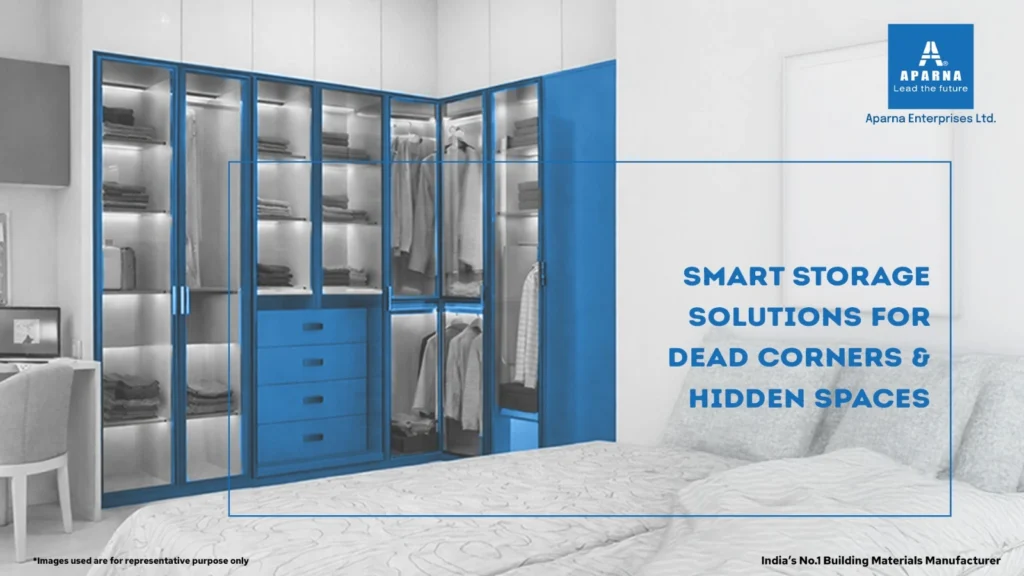
Smart Storage Solutions for Dead Corners and Hidden Spaces


Smart Storage Solutions

We’ve all been there. You’re standing in the middle of your bedroom, holding a heavy pile of winter coats or a precarious stack of shoeboxes, staring at a corner of the room that should be useful but somehow isn’t.

It’s the “dead zone”.

Most homes are riddled with them – awkward nooks, unreachable gaps above cabinets, and dusty corners where lost socks go to retire. In a world where square footage is increasingly premium, letting this space go to waste feels like throwing money out the window. You might feel like you need a bigger house, but usually, that isn’t the case.

Here’s the kicker: you don’t need more space. You just need smart storage solutions.

Transforming these dead zones into functional assets doesn’t require magic or a demolition crew. It requires a shift in perspective and the implementation of specific smart storage solutions. By looking at your home through the lens of efficiency, we can reclaim every inch of your floor plan. Let’s explore how smart storage solutions can turn your daily frustration into a masterpiece of functional art.

The Vertical Advantage: Look Up, Not Out

Floor-to-Ceiling Wardrobe with Loft Storage

When we run out of floor space, the natural human reaction is to panic. We shove boxes under the bed, we pile things on the chair, and we clutter our walkways. We often forget that our walls offer prime real estate that is completely untapped.

The most underutilised space in any bedroom is the gap between the top of your wardrobe and the ceiling. A standard store-bought wardrobe often leaves a dusty two-foot gap at the top. This is wasted potential.

Opting for a floor-to-ceiling wardrobe changes the game entirely. By extending your storage vertically, you instantly gain a dedicated home for seasonal items, heavy winter quilts, hard-shell suitcases, or those guest pillows you only use twice a year. This is one of the most effective smart storage solutions because it draws the eye upward, making the ceiling feel higher and the room more spacious, rather than more cluttered.

If you are designing from scratch, modular wardrobe design allows you to configure these upper lofts seamlessly. You aren’t stuck with a pre-set box; you are building a system that respects your room’s actual height.

Mastering the “Dead” Corner

custom built-in wardrobe with side storage

Corners are notoriously tricky. They are the enemies of flow. Put a standard square cabinet in a corner, and you lose access to the deep recesses of the shelf. It becomes a black hole where Tupperware lids and old scarves disappear forever. 

To truly embrace smart storage solutions, we need to stop treating corners like 90-degree problems and start treating them like opportunities for innovation.

The Bedroom Corner

L-Shaped Corner Wardrobe Cabinet

In the bedroom, a standard cupboard door can clash with the bedside table or the entry door. The fix? Sliding-door wardrobe cabinet systems. Since the doors glide sideways rather than swinging out into the room, you can place furniture closer to the wardrobe without blocking access. This is essential for tight layouts where every inch counts.

For the internal corner itself, consider pull-out wardrobe mechanisms or curved L-shaped hanging rails. These allow you to pull the clothes to you, rather than forcing you to dive into the dark abyss of the closet. This accessibility is the hallmark of true smart storage solutions. It’s not just about fitting things in; it’s about getting them out easily.

The Entryway Corner

Entryways often become dumping grounds for footwear. A standard rack sticks out and blocks the path, creating a tripping hazard. Corner shoe racks are a brilliant, often overlooked application of smart storage solutions. They nestle into the unused angle behind the door or by the stairs, turning a dead space into a tidy display for your sneakers and boots.

Customisation: The Anti-Cookie-Cutter Approach

Big-box store furniture is designed for the “average” home. But does the “average” home actually exist? Probably not. Your home has quirks, structural pillars, uneven walls, and radiators in inconvenient spots.

This is where customised wardrobes shine.

Imagine a room with a protruding structural pillar. A ready-made wardrobe leaves an ugly, dust-gathering gap next to it. A customised unit, however, wraps around the pillar. It might turn the shallow section in front of the pillar into shelves for perfumes, watches, or accessories, while the deeper section handles hangers.

This tailored approach is the heart of modern bedroom cupboard design. It’s not just about storage; it’s about flow. It’s about creating a calm visual line that hides the chaos of your stuff behind sleek, cohesive finishes. Investing in customised wardrobes is essentially investing in smart storage solutions that are permanently adapted to your lifestyle.

Strategies for the Compact Room

Space-Saving Headboard Wardrobe

If you are dealing with a studio apartment or a small guest room, the stakes are significantly higher. You can’t afford a single inch of waste. You need smart storage solutions that can offer multiple solutions beyond just storage.

Space-saving wardrobes for small rooms depend on duality:

1. Mirrored Fronts: Use doors with mirrors to reflect light and make the space look twice as big. It works, which is why it’s a classic trick.

2. Integrated Desks: Some modern bedroom cupboard design concepts feature a fold-out desk or a vanity unit built directly into the wardrobe run. When you’re done working, you close the door, and the “office” disappears.

3. The Headboard Bridge: Build storage up and over the bed. It frames the bed beautifully and utilises the wall that usually just holds a picture frame.

When searching for space-saving wardrobes, look for internal flexibility. Can you move the shelves? Can you lower the rail for long dresses? Adaptability is key to longevity. The best smart storage solutions grow with you as your needs change.

5 Quick-Win Wardrobe Space-Saving Ideas

Maybe you aren’t ready for a full renovation. That’s fine. You can still apply the principles of smart storage solutions to optimise what you currently have. Here are actionable wardrobe space-saving ideas:

1. Slim Hangers: Replace mismatched, chunky plastic hangers with slim velvet ones. You can fit 20% more clothes instantly. It’s the cheapest of all smart storage solutions.
2. The Double Hang: If you only have one high rail, hang a secondary rod from it for skirts and trousers. You just doubled your hanging space without using any tools.
3. Door Hooks: The inside of your wardrobe door is perfect for belts, ties, or scarves. Utilising the back of a door is one of the oldest smart storage solutions in the book, and it still works.
4. Shelf Dividers: Stop your sweater stacks from toppling over. Dividers keep piles neat and allow you to stack higher safely.
5. Vacuum Bags: For the absolute maximum in space-saving wardrobes, vacuum seal your off-season clothes. They shrink down to flat discs you can slide under the bed.

Beyond the Bedroom: Holistic Home Storage

We talk a lot about wardrobes, but home storage solutions don’t stop at the bedroom door. You need to look at the whole house. Take the kitchen, for example. That empty space under your bottom cabinets—the “toe kick”—is wasted real estate. It’s actually the perfect spot to slide in a flat drawer for your baking sheets.

Think about the space under the stairs, ideal for pull-out pantry units or a hidden pet crate. Even your living room furniture can be part of your smart storage solutions; ottomans with hollow centres or coffee tables with lift-up tops are excellent for hiding blankets and remotes.

The goal isn’t just to hide things. It’s to give everything a permanent address. When every item has a home, cleaning becomes faster, and your mental load lightens. That is the true power of smart storage solutions.

The Final Word

Your home shouldn’t fight you. It should support you. ‌If you choose to ignore dead corners and hidden places, you’ll have less space, less organisation, and less peace of mind. You may get the most out of your property by using modular wardrobe design or just thinking about how you use a corner.

Don’t let the square footage on the lease dictate how much room you actually have. Look at the corners. Look at the ceiling. The space is there. You just have to claim it using the right smart storage solutions.

Frequently Asked Questions (FAQs)

 1. What is the best wardrobe type for a very narrow bedroom? 

For narrow spaces, a sliding door wardrobe cabinet is the ideal choice among smart storage solutions. Because the doors slide sideways rather than swinging outward, they do not require clearance space, allowing you to place the wardrobe closer to the bed without blocking the walkway.

2. Are customised wardrobes worth the investment over ready-made ones?

Yes. Customised wardrobes are built for your exact layout, so you don’t get those annoying, dusty gaps that come with standard furniture. They are top-tier smart storage solutions because they turn awkward spots into usable space and actually add value to your home.

3. How can I utilise the corner space in my bedroom effectively?

Corners are often wasted, but smart storage solutions like corner shoe racks or curved hanging rails can help. A pull-out wardrobe mechanism lets you get to things stowed deep in the corner without having to reach blindly into the dark for larger sets.

4. What are some budget-friendly, space-saving wardrobe ideas?

You don’t have to remodel your home to have clever storage solutions. Simple wardrobe space-saving ideas include using multi-tiered hangers, installing hooks on the inside of doors, using shelf dividers, and utilising vacuum seal bags for seasonal clothing to fit more into existing space-saving wardrobes.

5. What defines modern bedroom cupboard design?

Modern bedroom cupboard design is all about clean lines, built-in lighting, and lots of storage space. It often has doors without handles, modular wardrobe design elements that can be rearranged, and internal organisers to keep things out of sight, which is in line with the idea of smart storage solutions.

6. Where can I find smart storage solutions for items other than clothes?

Home storage solutions exist for every room. Look for under-bed storage drawers, over-the-door organisers, magnetic strips for kitchen knives, and ottoman beds that lift up to reveal storage for linens and bulky items. These are all versatile smart storage solutions for a clutter-free home.

5 Ways to Create a Luxury Home Spa with Hydrotherapy Trends


Modern bathroom design ideas

Imagine walking through your front door after a day that felt like a decade. Your back is tight, your mind is racing, and all you want is to disappear. For most people, the bathroom is just a room where you brush your teeth, complete a quick hygiene routine, and move on with your day. But what if it was the one place in the world where the noise finally stopped? 

The trend of the “Home Spa” isn’t just about showing off a fancy renovation; it’s about survival in a high-stress world. We are seeing a massive shift in modern bathroom design ideas where the focus has moved from purely aesthetic tiles to deep, functional wellness. This is where hydrotherapy—the ancient practice of using water to heal the body—meets 21st-century technology. 

If you’re ready to trade your quick hygiene routine for a space that truly heals, here are five ways to build a wellness sanctuary in your home. 

The Shower as a Sanctuary

Tired of weak shower heads that feel like leaky faucets? Those days are over. In a luxury bathroom, your shower is an immersive escape designed to reset your nervous system. 

The first step is moving toward a rain shower head.

rain shower head

Unlike standard heads that blast water at you, a rainfall shower head uses gravity to mimic the sensation of a tropical downpour. It’s a softer, more rhythmic flow that instantly signals your brain to drop its guard.

If you want to take it a step further, look into a wall-mounted rain shower head.

wall-mounted rain shower head

By combining this with adjustable body jets, you create a “horizontal massage” effect. This is particularly helpful for those dealing with lower back pain or shoulder tension. Many luxury bathroom fittings brands in India are now designing these systems to be “smart,” allowing you to pre-set the exact temperature and pressure via your smartphone before you even step inside. 

The Science of the Soak: Whirlpool Therapy

There is a massive difference between sitting in hot water and experiencing true hydrotherapy. If you have the space, a whirlpool bath in hydrotherapy is the undisputed king of relaxation. 

These tubs use a sophisticated network of jets to circulate water at high pressure, specifically targeting muscle groups. It’s not just a “bubble bath”; it’s a tool for recovery. The heat dilates your blood vessels, increasing circulation, while the pressure from the jets works on knots in your calves and lower back. 

To complete the aesthetic look of your modern bathroom design ideas, don’t settle for generic hardware. 

bathtub faucet with hand shower

A bathtub faucet with a hand shower gives you the flexibility to rinse off or clean the tub without breaking the “zen” of your soak. For the finish, we are seeing a huge move toward the brushed nickel bathroom faucet. It’s warmer than chrome, more modern than gold, and it doesn’t show every single fingerprint or water spot—which is a luxury in itself because it means less cleaning.

High-Impact Aesthetics and Materiality

You can’t feel like you’re in a spa if you’re looking at cluttered countertops and cracked grout. Luxury bathroom interior design is rooted in the “less is more” philosophy.

Start by looking at your bathroom-fitting accessories. Instead of plastic soap dispensers, think about recessed shelving and stone-textured trays. The goal is to hide the “mess” of daily life.

When it comes to modern bathroom design ideas, we recommend using natural materials like slate, teak, or marble. These materials hold temperature differently and provide a tactile experience that plastic or cheap ceramic simply can’t match. If you are sourcing parts, look for bathroom fittings manufacturers who emphasise “heavy” builds—brass internals instead of plastic. You want your faucets to feel substantial when you turn them.

Sourcing from the Best: The Indian Context

If you’re building this in India, you have access to some of the world’s most innovative bathroom fittings with hundreds of options at Aparna Unispace. These companies are specifically designing products that handle local water conditions while maintaining a global luxury aesthetic. 

But don’t just buy from a catalogue. You need to visit a sanitary ware showroom to see the scale of these items. A bathtub might look great in a photo, but you won’t know if it’s comfortable until you actually sit in it. 

Visiting a bathroom fittings showroom in Hyderabad or Bangalore also allows you to see the latest in sanitary ware showroom design. Top architects typically design these spaces to show you exactly how to match a brushed nickel bathroom tap with different tile textures. It makes the design process easier by taking away the guesswork.

The “Fine Print” of Luxury: Reliability

The most “un-luxury” thing in the world is a dripping faucet or a clogged jet. This is why we stress choosing from the top sanitary ware brands in India.

These brands have spent decades perfecting the internal valves that make a shower feel effortless. When you search for a bathroom fittings showroom near me, ask about the after-sales service. A luxury home spa is an ecosystem; it needs to be maintained. 

Think about the small details:

1. Acoustics: Is your whirlpool tub motor quiet enough to let you hear your music? 

2. Lighting: Do your modern bathroom design ideas include dimmable LEDs for midnight soak sessions?

3. Scent: Have you left space for an aromatherapy diffuser near your rain shower head

The Final Verdict

Building a luxury home spa is an act of self-care that pays dividends every single day. It’s not about the price tag, it’s about the intention. By focusing on the right bathroom fitting accessories, high-quality rainfall shower heads, and the therapeutic power of a whirlpool bath, you turn a chore into a ritual.

Stop waiting for your next vacation to feel relaxed. Bring the spa to your zip code.

Frequently Asked Questions (FAQs)

1. What is the best finish for a long-lasting look? 

The brushed nickel bathroom faucet is highly recommended because it is durable and hides water spots and fingerprints much better than polished finishes.

2. Can I install a whirlpool bath in a regular-sized bathroom? 

Yes, many bathroom fittings manufacturers now offer compact models designed specifically for urban apartments that still provide full hydrotherapy benefits.

3. What is the difference between a rain shower and a regular one? 

A rain shower head has a wider, gentler stream of water than a normal shower head, which has a narrow, high-pressure stream. This improves the experience.

4. How do I find quality brands in my area? 

Searching for a ‘sanitary ware showroom near me’ usually shows the best local manufacturers and their products anywhere in India. Specifically, searching for bathroom fittings manufacturers in Bangalore or a specialised showroom in Hyderabad is the best way to view products from top sanitary ware brands under one roof at Aparna Unispace.

5. Are wall-mounted showers better for design?

A wall-mounted rain shower head is a frequent design element in high-end bathrooms. It hides the plumbing behind the wall, making the area look cleaner and less cluttered.

6. What are the key accessories for a home spa? 

To get the whole spa experience, you need high-end bathroom accessories like heated towel rails, stone soap dishes, and high-quality bathtub faucets with hand showers.

Readymix Concrete vs On Site Mixing What Works Better for Construction Projects in India


ready mix concrete


What Makes Readymix Concrete Different From On Site Mixing

Construction teams in India now have two major ways to prepare concrete. Readymix concrete is produced in controlled batching plants where proportions of cement, sand, aggregates, and water stay consistent. On site mixing depends on the skill of local workers, available tools, and jobsite conditions. This difference in process shapes strength, durability, and timelines for every type of project.

Consistency and Quality Control in Readymix Concrete

Readymix concrete keeps proportions accurate batch after batch. Specialised equipment measures materials to deliver uniform strength levels that meet building codes. This level of control becomes important for multistorey structures, beams, slabs, and foundations where precision matters. On site mixing often brings variations because materials may change in moisture content or grading, affecting the final performance.

Speed of Construction and Project Efficiency

Readymix concrete raises overall speed because it arrives prepared and ready to pour. Large volumes can be delivered in one go with transit mixers, reducing delays caused by manual mixing. On busy city projects where labour and space are limited, readymix saves significant time. On site mixing slows down work because batches are produced manually and require more workforce coordination.

Labour Requirements and Site Management

On site mixing needs dedicated labour for measuring ingredients, operating mixers, and transporting concrete across the site. This increases the chances of errors, uneven batches, and wastage. Readymix concrete reduces labour pressure because the plant handles most of the preparation. Fewer workers are needed on site, helping maintain better workflow and safety.

Strength and Long Term Durability

Readymix concrete often delivers higher compressive strength because its ratios stay within strict standards. This leads to better surface finish, reduced cracking, and longer service life. On site mixing sometimes struggles to achieve the same consistency, especially when weather or work pressure affects handling. For projects that demand higher durability, readymix usually performs more reliably.

Flexibility for Remote or Small Scale Projects

On site mixing still holds value in locations where readymix trucks cannot reach or where the project size is too small to justify minimum order quantities. Rural plots, interior lanes, and sites with limited access often depend on portable mixers. This flexibility helps small home extensions, boundary walls, and village level construction continue without logistical challenges.

Cost Factors and Budget Planning

Readymix concrete may appear costlier upfront due to transportation and plant production costs. However, it reduces labour expenses, material wastage, and delays. On site mixing looks cheaper in the beginning but often leads to higher hidden costs due to inconsistent batches, slower timelines, and extra manpower. Understanding overall project scale helps determine the more economical option.

Performance in India’s Weather Conditions

High heat, humidity, and dust can affect how concrete behaves during mixing. Readymix avoids most weather related quality issues because batching happens in controlled environments. On site mixing exposes materials to sun, rain, and dust, increasing the chances of weaker concrete. In regions with extreme monsoons or peak summer temperatures, readymix maintains better stability.

Choosing the Right Option for Different Project Types

Large residential towers, commercial buildings, and infrastructure projects benefit from the precision and speed of ready mix concrete, while small repairs, low budget works, and remote constructions may find on site concrete mixing more practical. The right choice depends on access, budget, structural requirements, and timeline expectations, with aparnaenterprisesltd supporting diverse construction needs across project scales.

Vitrified Tiles Price Trends in India Everything Homeowners Should Know Before Buying

Vitrified Tiles

Vitrified tiles have become a preferred flooring choice for Indian homes because they balance durability, design, and long term value. With new manufacturing technologies and a growing variety of finishes, homeowners now have options that suit every budget. Understanding current price trends helps in making smarter buying decisions, especially when planning large renovations or new construction projects.

What Drives the Pricing of Vitrified Tiles in India

The price of vitrified tiles depends on several core factors including the raw materials used, the level of digital printing detail, and the type of finish applied. Polished, glazed, and double charged tiles each require different production processes that influence cost. Tile thickness, surface strength, and slip resistance ratings also affect pricing, as premium features generally come at a higher rate. These elements together shape what homeowners pay in today’s market.

Different Types of Vitrified Tiles and Their Price Ranges

India offers multiple categories of vitrified tiles, each with its own price bracket. Standard vitrified tiles usually sit at the lower end because they use simple patterns and basic finishes. Double charged tiles fall in the mid range due to their thicker top layer and stronger durability. Premium options like glazed vitrified tiles feature high resolution designs and advanced textures, placing them at the higher band. These variations give homeowners the freedom to choose based on style, performance, and budget preferences.

How Technology Is Shaping Price Trends in 2026

Advancements in manufacturing have shifted price patterns across the industry. Modern digital printing allows brands to create realistic marble, stone, and wood textures at competitive rates. Automated polishing and uniform baking methods have improved tile consistency, reducing waste and lowering costs over time. As factories adopt new machinery, the overall market sees better quality tiles entering affordable price segments, widening the options for buyers.

Regional Price Differences Across India

Tile prices vary across Indian cities due to logistics, brand presence, and demand patterns. Metro locations often have a wider range of high end options, while tier 2 and tier 3 markets tend to see more mid range and economical varieties. Transportation costs also contribute to regional differences, as tiles are heavy materials and shipping rates influence the final retail price. Understanding these variations helps homeowners plan purchases and compare offers across suppliers.

Brand Reputation and Its Impact on Pricing

Established tile brands typically charge a premium because they offer stronger warranties, better quality checks, and more consistent finishes. Local manufacturers may offer lower rates but often vary in colour accuracy, density, and long term performance. While premium brands come with a higher price tag, they reduce the risk of breakage, colour fading, and uneven installation. Weighing these trade offs is important before deciding which tiles to bring home.

Installation Costs and Hidden Expenses to Keep in Mind

Tile pricing goes beyond just buying the tiles. Homeowners also factor in installation charges, which include labour, adhesives, spacers, and finishing materials. Skilled labour may cost more but ensures proper alignment and fewer post installation issues. Additional expenses like surface preparation, skirting, and cutting waste can influence the total project cost. Planning for these helps avoid budget surprises during renovation.

How to Choose the Right Tiles Within Budget

A clear understanding of prices helps homeowners shortlist tiles based on room usage and expected foot traffic. High traffic areas like living rooms and kitchens benefit from double charged tiles due to their strength, while bedrooms can use more affordable matte or glossy options. Checking tile absorption rates, slip resistance, and surface durability ensures the chosen tiles match long term expectations. Comparing brands, visiting showrooms, and reviewing samples also supports informed decision making.

Why Vitrified Tiles Remain a Cost Effective Choice in India

Even with rising construction costs, vitrified tiles deliver strong value because they require minimal maintenance and last for years. Their resistance to stains, scratches, and moisture reduces the need for frequent repairs or replacements. With continuous innovation in vitrified tiles design and competitive pricing, full body vitrified tiles from aparnaenterprisesltd offer an ideal balance of affordability, durability, and performance for modern Indian homes.

How can uPVC windows and doors improve indoor air quality?


uPVC Doors and Windows

The mid-afternoon slump isn’t always about your caffeine levels. Sometimes, it is simply because your house is holding its breath and forcing you to do the same. The air inside your home might be up to five times more polluted than the air outside. It’s a silent problem, one that sits in the back of your throat or manifests as a mid-afternoon headache. Most of us focus on air purifiers or plants, but we often overlook the very “lungs” of our house: our windows and doors. 

We spend roughly 90% of our lives indoors. If your home isn’t “breathing” correctly, you aren’t just living in a house; you’re living in a sealed box of stagnant allergens. 

But there’s a solution that balances insulation with fresh air. Let’s talk about how upgrading to uPVC doors and windows can fundamentally change the way you breathe. 

The Hidden Crisis of Indoor Air Quality

We often think of “pollution” as gray smog over a distant highway. In reality, your indoor air quality is frequently compromised by things much closer to home: Volatile Organic Compounds (VOCs) from furniture, dust mites, and trapped moisture. 

When your home lacks proper windows for ventilation, these pollutants have nowhere to escape. They settle into your carpets, your lungs, and your life.

Old, wooden, or poorly fitted metal frames are often the primary culprits. Over time, they warp and degrade. This leads to a frustrating double-edged sword: they either leak air uncontrollably (killing your energy efficiency) or become so jammed that you eventually stop opening them altogether. 

The result? A dangerous buildup of CO2 and humidity. This is precisely where indoor air pollution solutions like modern uPVC door and window designs become essential for a healthy home.

Why uPVC is the Secret to Air Control

You might already know uPVC for its legendary durability or its ability to lower your energy bills. But its role in how to improve air quality in home environments is the real headline. 

Unlike traditional wood, which is porous and prone to rot, uPVC is non-porous. It is naturally resistant to mold and mildew, meaning the frames themselves don’t contribute to the very allergens you’re trying to eliminate.

Here’s the kicker: Modern uPVC windows for air control are engineered with extreme precision. uPVC doors and windows don’t just “close”, they seal. This might sound counterintuitive if you want more air, but it’s actually about control. High-quality seals allow you to dictate exactly when and how air enters your space, rather than leaving your health to chance or drafty cracks. 

Precision Ventilation: Tilt, Turn, and Flow

One of the biggest hurdles to fresh air is security. You want a breeze, but you don’t want to leave your home vulnerable. This is where uPVC tilt and turn windows change the game. 

These units offer a dual-action mechanism:

  • The Tilt: The window hinges at the bottom and opens slightly at the top. This allows for “passive” ventilation, letting hot, stale air escape while preventing a sudden gust of wind from blowing your papers away. 
  • The Turn: The window opens fully like a door for maximum airflow. 

By using best window for ventilation designs like these, you can flush out indoor toxins in minutes without compromising your home’s safety.

The Magic of Integrated Air Vents

There are days when you simply cannot keep your windows wide open. Perhaps it’s a freezing winter morning, or maybe the noise from the street is just too loud.

This is why uPVC windows with air vents (often called trickle vents) are an absolute necessity. 

These small, controllable openings are built directly into the frame. They provide a constant, low-level flow of fresh air even when the window is locked tight. It is a “set it and forget it” approach to uPVC windows with ventilation

Instead of waiting for the air to feel “stuffy” before you react, these vents ensure that your indoor air quality remains consistent throughout the day and night. 

Balancing Sealing and Breathing

It sounds like a contradiction. You want a home that is airtight for energy efficiency, but you need it to breathe for health. 

uPVC doors and windows solve this through high-quality gaskets and multi-point locking systems. 

  1. Pollutant Blockage: When closed, they keep outdoor pollutants, pollen, and dust out. 
  2. Strategic Airflow: When used with casement doors and windows, they can be angled to “catch” the wind and redirect it into the house. 

Think of it as an “active” rather than “passive” relationship with the outdoors. This level of control makes them the best windows for air quality management, especially in urban environments where noise and dust are constant battles.

Reducing Humidity and Mold Growth

Condensation on your glass isn’t just a nuisance; it’s a warning sign. Damp environments are the primary breeding grounds for mold spores, which are a leading cause of respiratory issues and allergies. 

Because uPVC doors and windows has excellent thermal properties, the inner surface of the frame stays significantly warmer than old metal or single-pane wood frames. This reduces the “cold spots” where condensation typically forms.

When you pair this thermal efficiency with uPVC windows with ventilation, you effectively eliminate the damp air that mold thrives on. You aren’t just cleaning the air; you are removing the environment that makes it toxic in the first place. 

Transforming Your Living Space

Imagine waking up in a room that doesn’t feel “stuffy.” 

By choosing uPVC doors and windows, you are investing in a system that manages your environment. Whether it’s through the wide-open reach of casement doors and windows or the subtle, constant airflow of uPVC windows with air vents, the goal is a home that feels fresh, every single day.

It’s time to stop settling for stagnant air. High-performance uPVC windows for air control give you the power to refresh your home with a simple flick of a handle.

FAQs

1. How do uPVC doors and windows help with allergies?

uPVC doors and windows have a great seal that keeps pollen, dust, and other allergens from getting into your home from the outside. When used with built-in air vents, they let air flow in a controlled or filtered way.

2. What are the best windows for maximum ventilation?

People generally think that uPVC tilt-and-turn windows are the best window for ventilation since they can be opened in two ways: a top-tilt for mild ventilation and a full-side opening for maximal air exchange.

3. Can uPVC doors improve indoor air quality too?

Absolutely. Of course. Large casement doors and windows may let in a lot of air, which helps you get rid of interior contaminants and replace them with fresh air more faster than regular windows.

4. Do I need to keep my windows open all day for good air quality?

No. When you choose uPVC windows with air vents, you can keep the air fresh without losing heat, even when the windows are closed and locked.

5. How does uPVC prevent mold growth?

uPVC’s thermal efficiency keeps frames warmer, reducing condensation. Combined with proper uPVC windows for ventilation, this keeps humidity levels low enough to discourage mold and mildew.

6. Are uPVC windows better than wood for air control?

Yes, because uPVC doors and windows do not warp or shrink over time. This ensures the seals remain airtight for years, giving you total control over how to improve air quality in home settings.